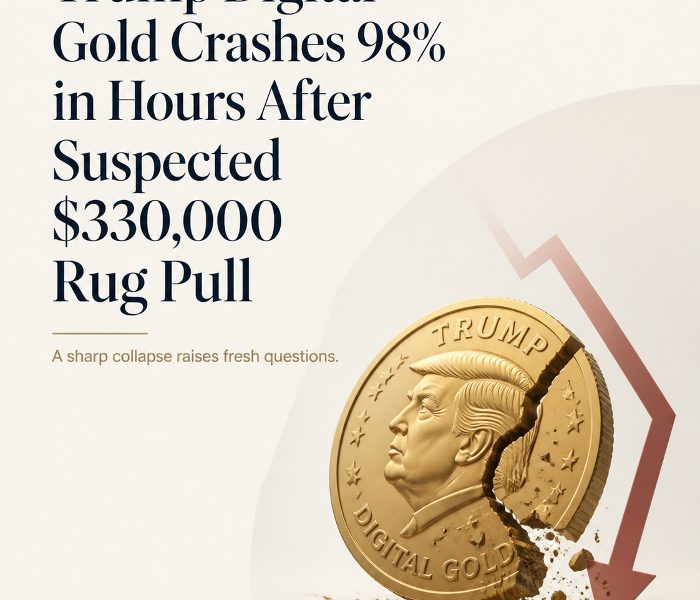
Trump Digital Gold Crashes 98% in Hours After Suspected $330,000 Rug Pull
In another stark reminder of the volatile and high-risk nature of speculative micro-cap crypto assets, a newly created token named Trump Digital Gold experienced a catastrophic 98% price crash within hours of its launch. On-chain analysis indicates a classic “rug pull” execution, where the project’s deployer drained an estimated $330,000 in liquidity from the decentralized exchange (DEX) pool, leaving retail buyers with virtually worthless tokens.
At cdropfi.com (Crypto Intelligence), we analyze these high-profile market events to help traders, researchers, and decentralized finance (DeFi) participants understand on-chain mechanics, identify critical vulnerability signals, and practice rigorous Web3 security.

On-Chain Timeline: Anatomy of the $330,000 Liquidity Drain
The collapse of Trump Digital Gold unfolded rapidly across decentralized liquidity pools. Political and celebrity-themed meme tokens often capitalize on trending news cycles to generate rapid retail interest. However, behind the public excitement, the underlying smart contract design and tokenomics presented immediate red flags.
Based on transparent public blockchain records [Source: On-Chain Blockchain Explorer Data], the standard sequence of the exploit occurred as follows:
- Token Deployment & Initial Pairing: The deployer wallet minted the total supply of Trump Digital Gold tokens and paired a portion of them with native network assets (such as ETH or SOL) to establish an automated market maker (AMM) trading pair.
- Social Hype & Volume Accumulation: Speculative buyers pushed buying volume into the pool, inflating the token’s market capitalization and raising the reserve of wrapped native assets inside the DEX contract.
- Unlocked Liquidity Withdrawal: Because the liquidity provider (LP) tokens were neither locked in a verifiably secure smart contract escrow nor burned, the deployer maintained full authority to revoke liquidity.
- The Drain (“Rug Pull”): In a single transaction, the project controller removed liquidity, converting the pooled funds into approximately $330,000 worth of native crypto, causing an immediate 98% collapse in price due to the complete removal of buy-side liquidity.
Metrics Comparison: Legitimate Project vs. Malicious Setup
Evaluating token mechanics before interacting with decentralized markets is critical. Below is an analytical comparison highlighting the structural differences between standard protocol deployments and high-risk setups like Trump Digital Gold.
| Metric / Feature Standard Protocol Setup Suspected Malicious Setup (e.g., Trump Digital Gold) | ||
| Liquidity Lock (LP Tokens) | Locked via time-lock contracts (e.g., Uncx, PinkSale) or burned entirely to a dead address. | Unlocked, fully accessible by the deployer address at any time. |
| Smart Contract Audit | Verified code audited by reputable Web3 security firms. | Unverified source code or un-audited contracts with hidden mint/drain functions. |
| Token Distribution | Distributed allocations across ecosystem, community, and locked team vesting schedules. | Extreme concentration (e.g., >80% held by deployer or associated insider wallets). |
| Sell Tax / Transfer Fees | Transparent, minimal (0-5%) intended for development or automatic liquidity provision. | Variable or hidden functions capable of turning into a honeypot (100% sell tax). |
Key Lessons in Crypto Tokenomics and Web3 Security
Events such as the Trump Digital Gold liquidity drain serve as important operational case studies for crypto market participants. Navigating decentralized finance requires constant vigilance and strict adherence to security hygiene.
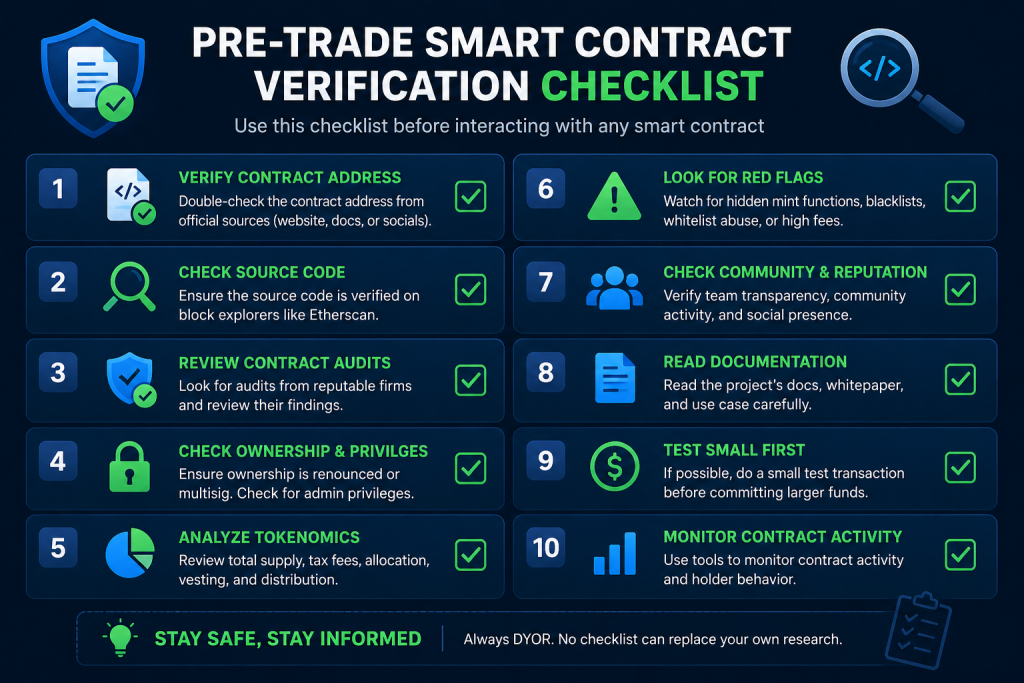
1. Verify Liquidity Pool Lock Status
Never rely solely on social media announcements regarding liquidity locks. Independent verification using blockchain block explorers or dedicated analytics platforms (such as DEXScreener or DEXTools) is essential. If the LP tokens reside in the deployer wallet, the liquidity can be withdrawn instantaneously.
2. Analyze Wallet Concentration and On-Chain Distribution
Before initiating any on-chain interaction, inspect the top holder list. If a small cluster of interconnected wallet addresses controls a dominant percentage of the circulating supply, these key holders possess the capacity to execute massive price dumps regardless of overall market sentiment.
3. Use Automated Smart Contract Security Scanners
Automated security services like GoPlus Security, Token Sniffer, and Honeypot.is can quickly identify common malicious smart contract functions, such as disabled sell functionalities, proxy contracts with unannounced upgradeability, or unauthorized mint functions.
4. Practice Strict Wallet Safety Protocols
When interacting with unverified micro-cap tokens, utilize isolated “burner” wallets rather than main storage accounts. Limit allowance approvals to exact transaction amounts rather than granting unlimited token approvals to unfamiliar decentralized applications (dApps).
Conclusion
The 98% price crash of Trump Digital Gold highlights the persistent vulnerabilities within unregulated meme token markets. While the open nature of Web3 technology allows for rapid permissionless innovation, it equally highlights the absolute necessity for individual research, risk management, and smart contract verification.
Stay informed with continuous risk analysis, on-chain metrics, and Web3 security intelligence by exploring the practical guides available on cdropfi.com.
Risk & Compliance Disclaimer: Content published by cdropfi.com is intended strictly for educational and informational intelligence purposes. It does not constitute financial, legal, or investment advice. Micro-cap cryptocurrencies and meme tokens carry extreme market risk, illiquidity, and smart contract vulnerability. Always conduct your own research (DYOR) and consult a qualified financial advisor before engaging in high-risk digital asset transactions.